As the Kalispel Tribe revives the Salish language, yearly celebrations help it thrive.
Every March, the Celebrating Salish Conference draws more than 700 participants into a shared space united by a single cause—language. Members from more than 25 Inland Northwest tribal nations make their way to Spokane fueled by a passion that transcends generational and tribal lines. Now approaching its 16th year, the conference has evolved far beyond its original vision.
This passion was sparked by JR Bluff, Language Director for the Kalispel Tribe, who recognized the importance of preserving a language deeply woven into the region’s Indigenous stories and culture. Alongside educator Chistopher Parkin, he developed tools and a curriculum that made learning Salish accessible. What began in 2009 as a one-day gathering to share these materials with elders has transformed into a broad community movement.
Today, the three-day conference offers a series of activities that engage all ages. “We have the youth, the parents, the teachers, the elders, our leaders, and our council people all in the same room together,” explains JR.
Unlike similar events attended only by a small group of representatives, the Celebrating Salish Conference encourages tribal members to rally entire communities. Annual support from Innovia lowers financial barriers and ensures that event attendance is affordable.
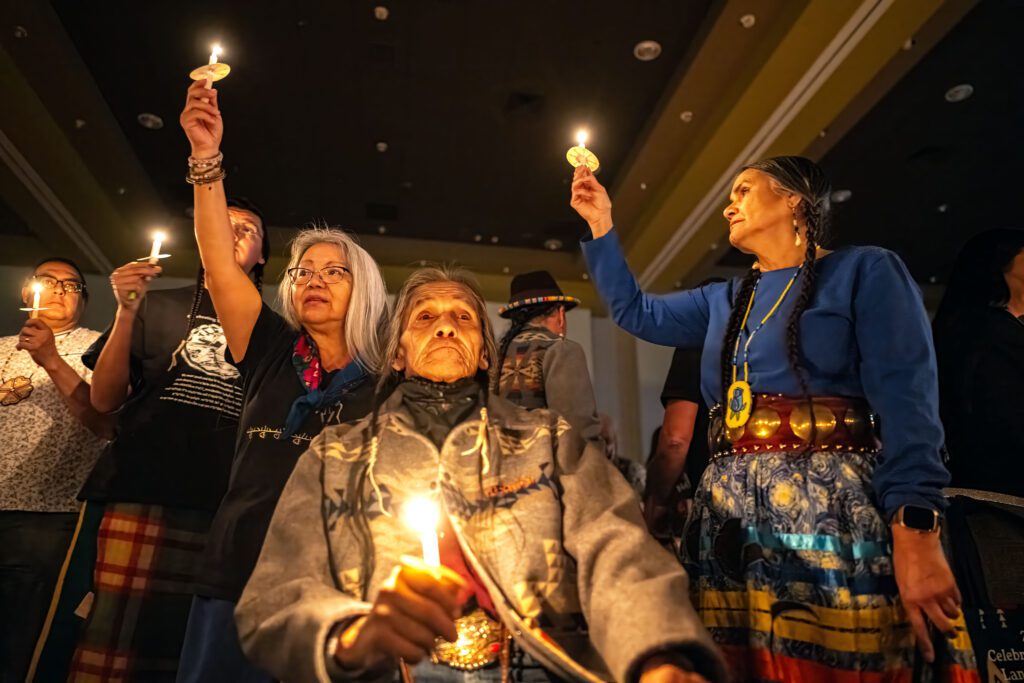
Through workshops, ceremonies, and talent competitions, the conference provides space for genuine immersion in Salish. It involves more than simply talking about the language.
Language is personal. It’s all driven by good, strong hearts, and we’re feeding those hearts. If this conference makes just one person feel a little more confident and more hopeful about making change, we are making a difference.”
JR Bluff, Language Director for the Kalispel Tribe
Participants spend 72 hours hearing the language, speaking the language, and honoring language leaders, all while building new friendships. Led by local changemakers rather than outside experts, the program is deeply personal.
“Having the people who have the heart for the language present is a big deal,” says JR. “To them it isn’t their job, it’s who they are.”
An awards ceremony offers additional recognition to those at the forefront, particularly the teachers.
“We really do our best to put the teachers—the people doing the work—on that pedestal because they deserve it.” As word of the event stretches farther in years to come, JR hopes to make a lasting impact in the community. With the conference acting as a catalyst for learning, connection, and internal growth and empowerment, he hopes attendees return home inspired and committed to carrying forward the mission of language revitalization.
“Language is personal. It’s all driven by good, strong hearts, and we’re feeding those hearts,” he says. “If this conference makes just one person feel a little more confident and more hopeful about making change, we are making a difference.”